

The Case Studies of Ile-de-Nantes and Docks-de-Seine
![3] The factory CPCU in Saint- Ouen, ©Varvara Toura, 2023. The factory CPCU of the Parisian company of urban heating is located in the site of Docks-de-Seine near new residential buildings and shows the continuous presence of industrial activities in the area.](https://geographie-cites.cnrs.fr/wp-content/uploads/2025/02/preservation-industrial-heritage-toura.jpg)
The factory CPCU in Saint- Ouen ©Varvara Toura, 2023.
The factory CPCU of the Parisian company of urban heating is located in the site of Docks-de-Seine near new residential buildings and shows the continuous presence of industrial
activities in the area.
The paper from Varvara Toura, researcher in urban geography, questions the meaning of preservation of industrial remnants in former industrial cities which are characterized, especially after their deindustrialization, by urban regeneration programs.
Isolated buildings as factories and abandoned infrastructure and equipment dated on the industrial era are often demolished in favor of contemporary buildings which seem to better correspond to users’ needs and contemporary aesthetics. The two French case studies reported in the paper are considered as exemplary models of architectural and urban design forms in former industrial cities as they allow the dialogue between buildings, equipment, and infrastructure of different eras (industrial, contemporary)
On the one hand, we have the reconversion project Ile-de-Nantes, a brownfield within the former industrial city of Nantes, a city with a significant industrial heritage. On the other hand, we have the reconversion project Docks-de-Seine, a brownfield located in the city of Saint-Ouen in the outskirts of Paris. The study and comparison of the two case studies revealed the risk of gentrification in former industrial cities as their working-class identity changes due to the design of buildings by star architects, resulting in the arrival of executives and the rejection towards the cities’ periphery of the modest socio-professional categories.
This article is part of the special issue “Meaning in Architecture, Now” of the journal Philosophy Kitchen which is supported by the School of Architecture of the University of Torino (Università di Torino).
Toura, V. (2024). The Preservation of Industrial Heritage as a Form of Urban Resilience. The Case Studies of Ile-de-Nantes and Docks-de-Seine. Philosophy Kitchen – Rivista Di Filosofia Contemporanea, (21), 231–248. https://doi.org/10.13135/2385-1945/11630
It is with great pleasure to announce the publication of my article “The Preservation of Industrial Heritage as a Form of Urban Resilience. The Case Studies of Ile-de-Nantes and Docks-de-Seine” concerning the challenges of preservation of industrial heritage in contemporary societies.
Varvara Toura
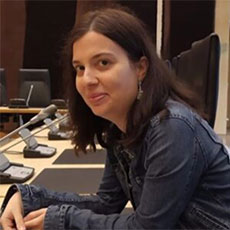 Varvara Toura
Architect-urban planner, researcher in urban geography. She holds a PhD in urban studies (geography, sociology, political science, heritage studies). Her thesis was conducted at EHESS/Géographie- Cités in Paris, France under the supervision of Professor Marie-Vic Ozouf-Marignier.


