Kai Shang, a visiting PhD student
Kai Shang (Tsinghua University, Beijing, China), is a visiting PhD student at Université Paris Cité and the UMR 8504 Géographie-cités laboratory for a six-month research stay.


Kai Shang (Tsinghua University, Beijing, China), is a visiting PhD student at Université Paris Cité and the UMR 8504 Géographie-cités laboratory for a six-month research stay.

A data paper by Claude Grasland and Etienne Toureille published in the Cybergeo online review.

A presentation by Cinzia Losavio, at the Department of Geography and Resource Management of the Chinese University of Hong Kong on June 25.

How can we explain the deliberate omission of the vast majority of small and medium-sized cities in most studies on urban China?An article by Denise Pumain for the Cybergeo Conversation Blog.
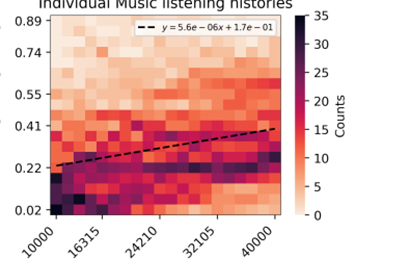
A paper by Célestin Zimmerlin, Thomas Louail, Manuel Moussallam and Marc Barthelemy.
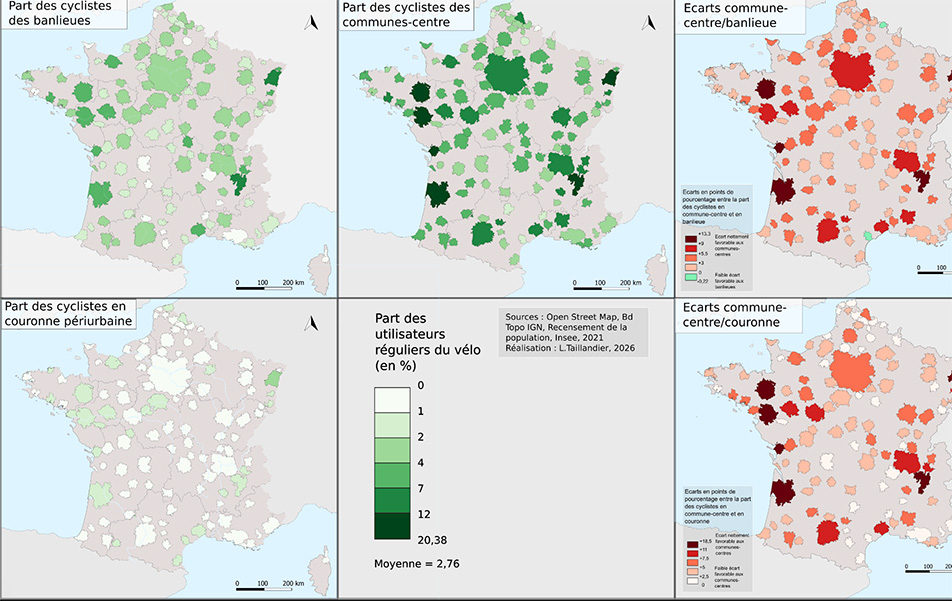
The heterogeneity of cycling within and between functional urban ereas: A modeling approach. Monday, June 1 at Campus Condorcet.
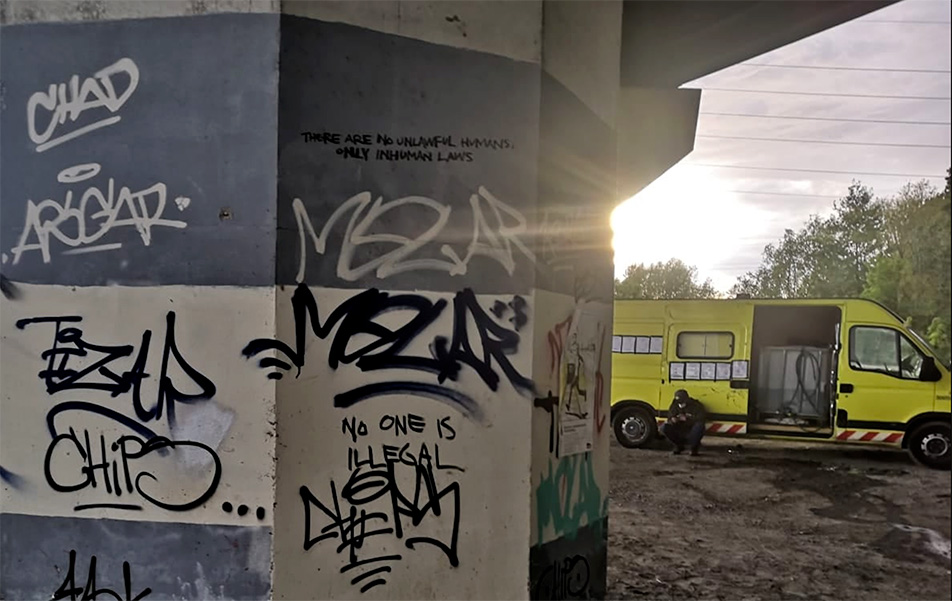
The DISEE project examines the spatial dimension of discouragement, the making of "long-term volunteers," and the circulation of knowledge between engagement territories.
Dates : 2026-2027
The DISEE project studies how spatial configurations – peripheral relegation of makeshift camps, distance from urban centers, fragmentation of intervention sites – affect the trajectories of voluntary engagement with exiled people. The project focuses more specifically on two borderland field sites (Calais and Briançon).

Chapter 3 of the volume The Mobile Individual: Everyday Life, Long-Term Temporalities, and Mobile Subjectivities", authored by Hadrien Commenges and Julie Vallée.

With Judge Craig Mitchell and the filmmakers, Friday, April 10, 2026 at MK2 Bibliothèque.
Bâtiment de recherches sud
UMR 8504 Géographie-cités
5, cours des Humanités
93322 Aubervilliers cedex
+33 (0)1 88 12 01 09
contact@parisgeo.cnrs.fr


©2026 All rights reserved. Legal notices – Privacy policy


